
Does Kunafa Need to Be Refrigerated? (Yes – Full Storage Guide)
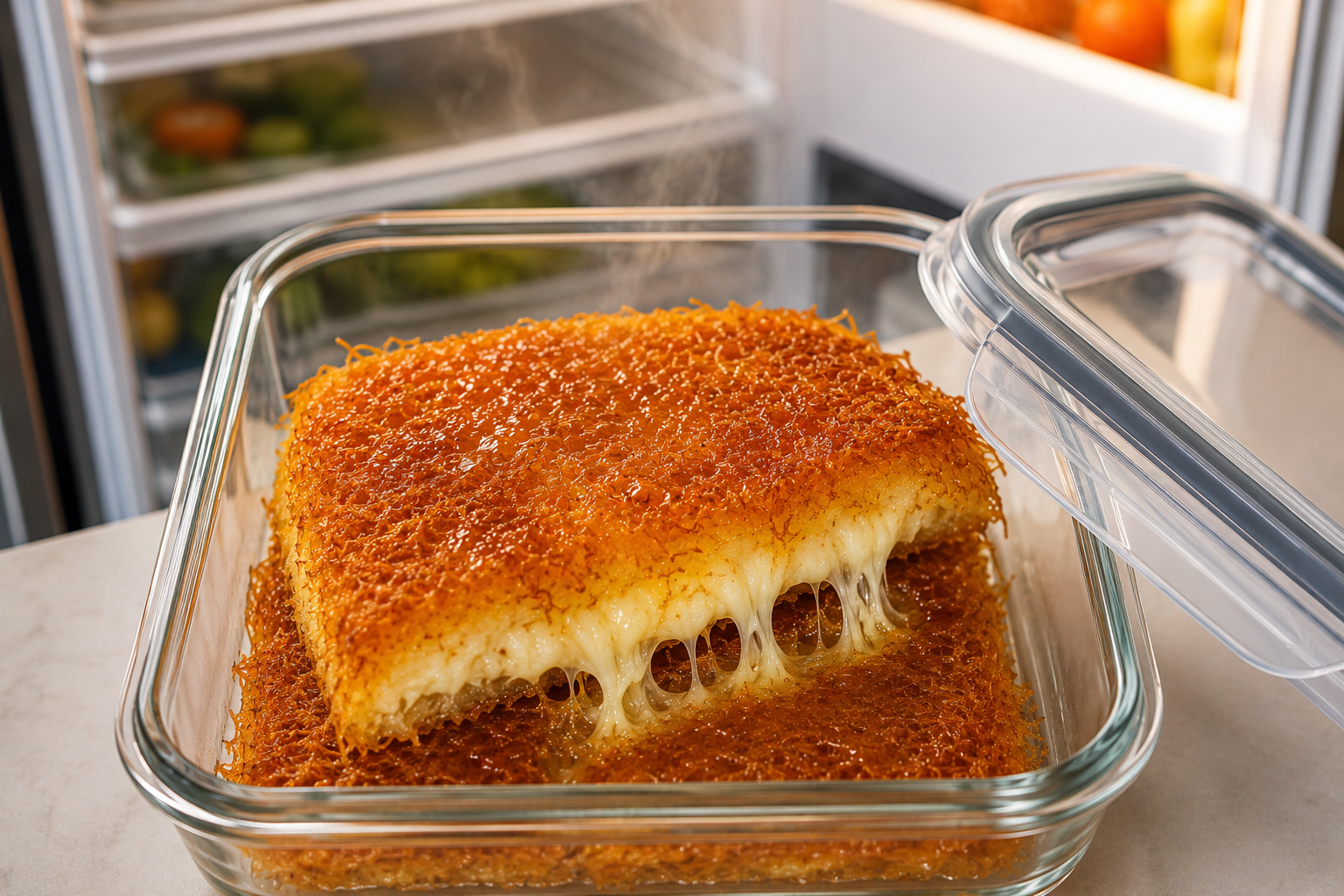
Quick answer: Yes, kunafa needs to be refrigerated if it contains any dairy filling (most varieties do) or if you won’t finish it within 2 hours of it cooling. Store it in an airtight container for up to 3-4 days, or freeze it for up to 2 months. Only fully dairy-free, nut-based kunafa can safely sit at room temperature a little longer – and even then, the fridge is the safer default.
Why Kunafa Needs Special Storage Care
Kunafa (also spelled knafeh or kanafa) is a shredded phyllo pastry layered with a dairy or nut filling and soaked in sugar syrup. That combination creates a storage tension: the dairy filling demands refrigeration for safety, but the fridge softens the crispy pastry that makes kunafa special in the first place. Bacteria multiply fastest between 40°F and 140°F – food safety’s “danger zone” – and cheese-based fillings sit squarely in the risk category. The sugar syrup slows spoilage but doesn’t prevent it.
Do You Need to Refrigerate Your Kunafa?
Refrigerate it if:
- It contains any cheese or cream filling
- You won’t eat it within 2 hours
- Room temperature is above 70°F (21°C)
- You want it to last more than a day
Room temperature may be fine, briefly, if:
- It’s completely dairy-free (nuts and syrup only)
- You’ll eat it within 2 hours
- The room is cool (under 70°F)
- It just came out of the oven and is still warm
Bottom line: when in doubt, refrigerate. Most kunafa contains dairy, and food safety guidelines don’t leave much room for exceptions.
How Long Does Kunafa Last? Room Temp vs. Fridge vs. Freezer
| Storage | Cheese-filled | Nut-filled (dairy-free) |
|---|---|---|
| Room temp (70-75°F) | Up to 2 hours | 4-6 hours |
| Refrigerated (33-40°F) | 2-3 days | Up to 5 days |
| Frozen (0°F or below) | 1-2 months | 1-2 months |
Texture starts to decline around the 2-week mark in the freezer even though it’s still safe to eat for longer, so for best quality, aim to finish frozen kunafa within a month.
How to Refrigerate Kunafa the Right Way
- Cool it first – let it sit at room temperature for 30-45 minutes before refrigerating, so you don’t trap steam and create sogginess.
- Use an airtight container – glass containers with snap-lock lids work best; avoid metal, which can react with the syrup.
- Cut into portions before storing, so you’re only reheating what you’ll eat.
- Layer with parchment paper if stacking pieces, to stop them sticking together.
- Store in the main body of the fridge, not the door, where temperature swings more.
How to Freeze Kunafa
- Let it cool completely.
- Cut into individual portions and flash-freeze on a parchment-lined tray for 1-2 hours until firm.
- Wrap each piece tightly in plastic wrap, then a layer of foil.
- Label with the date and freeze for up to 2 months.
- Thaw in the fridge for 8-12 hours before reheating – never at room temperature.
Nut-based kunafa freezes noticeably better than cheese varieties, which can turn slightly grainy after thawing.
Is Kunafa Eaten Hot or Cold?
Kunafa is traditionally served warm, right after baking, when the pastry is at its crispest and the filling is soft and melted. That said, it’s safe to eat cold straight from the fridge – you’ll just get a firmer, less crispy texture. If you’re serving refrigerated kunafa, a quick reheat gets you much closer to the fresh-baked experience.
How to Reheat Kunafa
Oven (best for restoring crispness): Preheat to 350°F. Cover loosely with foil, heat 10-15 minutes, then uncover for the last 2-3 minutes to re-crisp the top.
Air fryer (fastest way to get crisp results): Preheat to 300°F and heat individual portions for 3-4 minutes.
Microwave (quick, but won’t restore crispness): Heat in 20-second bursts at 50% power. Best for cheese varieties where creaminess matters more than crunch.
Signs Your Kunafa Has Gone Bad
- Mold, discoloration, or syrup that’s crystallized or separated
- Excessive sogginess, unusual hardening, or curdled filling
- A sour, fermented, or “off” smell
- Any noticeably sour or bitter taste
If you notice any of these, discard it – reheating won’t make spoiled kunafa safe.
Storage by Kunafa Type
| Type | Refrigeration | Best Used Within |
|---|---|---|
| Nabulsi cheese | Essential | 2-3 days |
| Cream/Ishta filling | Essential | 1-2 days |
| Nut-filled | Recommended | 3-5 days |
| Vegan (plant-based) | Recommended | 3-4 days |
Storage Mistakes to Avoid
- Refrigerating kunafa while it’s still hot (traps steam, causes sogginess)
- Leaving it uncovered (it absorbs fridge odors easily)
- Storing it in metal containers (can react with the syrup)
- Thawing frozen kunafa at room temperature (a food safety risk)
- Assuming the sugar syrup alone keeps it safe – it slows spoilage, but doesn’t stop it
FAQ
Does knafeh need to be refrigerated? Yes – knafeh and kunafa are the same dessert, just different spellings, and the same refrigeration rules apply either way.
Can I leave kunafa out overnight? No. Dairy-containing kunafa shouldn’t sit at room temperature for more than 2 hours. Refrigerate leftovers promptly.
Can you freeze kunafa? Yes – well-wrapped kunafa freezes for up to 2 months, though nut-based varieties hold their texture better than cheese ones.
Is kunafa eaten hot or cold? It’s traditionally eaten warm, but it’s perfectly safe cold from the fridge – just less crispy.
How long does kunafa last without a fridge? About 2 hours for dairy varieties, and up to 4-6 hours for nut-only, dairy-free versions.
Craving fresh kunafa without the storage guesswork? Order it fresh from Ali’s Bake and enjoy it the way it’s meant to be eaten – warm, crisp, and made to order.